
Our step-by-step Fidelity Roth IRA tutorial shows you how to open an account, make your first contribution, and invest in index funds like FXAIX to start building wealth.
Why a Fidelity Roth IRA is a Perfect Start for Investors
Does the thought of opening a retirement account feel complicated and intimidating? You know you should start investing, but the process of where to open an account, how to fund it, and what to buy can be enough to make you put it off for another day.
What if you could get the entire thing set up in under 15 minutes?
In this straightforward, step-by-step guide, we’re demystifying the process. We’ll show you exactly how to open a Roth IRA with Fidelity, link your bank account, make your first contribution, and—most importantly—how to invest that money in low-cost index funds so it can actually grow. Let’s turn your retirement savings from a vague goal into a reality.
What is a Fidelity Roth IRA?
Think of a Roth IRA as a special, tax-free container for your investments. You put money in that you’ve already paid taxes on, and then all the growth and withdrawals in retirement are 100% tax-free. It’s one of the most powerful tools for young investors.
Fidelity is one of the best places to hold this “container” because they offer:
- No account fees or minimums for their standard Roth IRA.
- Some of the lowest-cost index funds in the industry.
- A user-friendly platform that makes managing your investments simple.
By the end of this guide, you’ll be on your way to taking full advantage of these benefits.
Top Fidelity Index Funds for Your Roth IRA
Before we dive into the steps, let’s look at what you’ll be investing in. Fidelity offers excellent index funds that are perfect for beginners. Here’s a quick comparison of the most popular options:
| Fund Ticker & Name | Description | Benefit |
|---|---|---|
| FXAIX (Fidelity 500 Index Fund) | Tracks the S&P 500 (500 largest U.S. companies) | Simple, diversified exposure to the U.S. market’s biggest players. |
| FSKAX (Fidelity Total Market Index Fund) | Tracks the entire U.S. stock market | Broader diversification than FXAIX, includes small & mid-cap companies. |
| FZROX (Fidelity ZERO Total Market Index Fund) | Also tracks the total U.S. market | Zero expense ratio—you pay no annual fees at all. |
For this Fidelity Roth IRA tutorial, we’ll use FXAIX as our example, but any of these is a fantastic choice for a beginner.
Your Step-by-Step Fidelity Roth IRA Tutorial
Follow these three simple steps to go from having no account to being an invested investor.
Step 1: Open Your Roth IRA Account
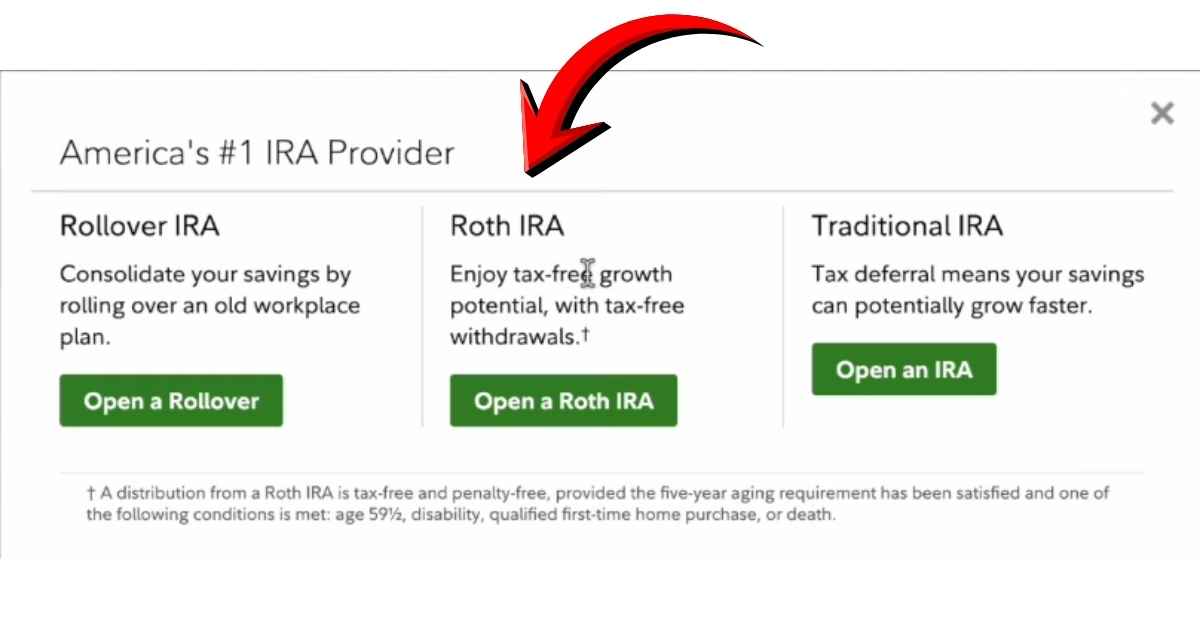
- Go to Fidelity.com and click the “Open an Account” button.
- On the next page, under “Retirement and IAS,” click the “Open an account” button.
- Select “Open a Roth IRA.” If you’re a new customer, select “No” when asked if you’re already a Fidelity customer.
- Fill out the application with your personal details (name, Social Security Number, address, etc.).
- Create your username, password, and set up two-factor authentication (2FA) for security. This is highly recommended.
- Finally, you’ll be prompted to designate a beneficiary—the person who would inherit the account if anything happened to you.
Step 2: Link Your Bank and Make Your First Contribution
Now that your account is open, you need to fund it. This is your Roth IRA contribution.
- From your account dashboard, go to the “Transfer” tab.
- Click “EFT to or from a bank” (Electronic Funds Transfer).
- Select the bank account you want to link and pull money from.
- Choose your new Roth IRA as the “To” account.
- Enter the amount you want to contribute. For 2026, the limit is $7,000 ($8,000 if you’re 50 or older).
- Review the details and click “Submit.”
Your transfer will be initiated. It might take a couple of days to fully clear, but you can often start investing the money immediately.
Step 3: How to Invest in Index Funds (The Most Important Step!)
Simply having cash in your Roth IRA isn’t enough—it needs to be invested. Here’s how to buy your first index fund.
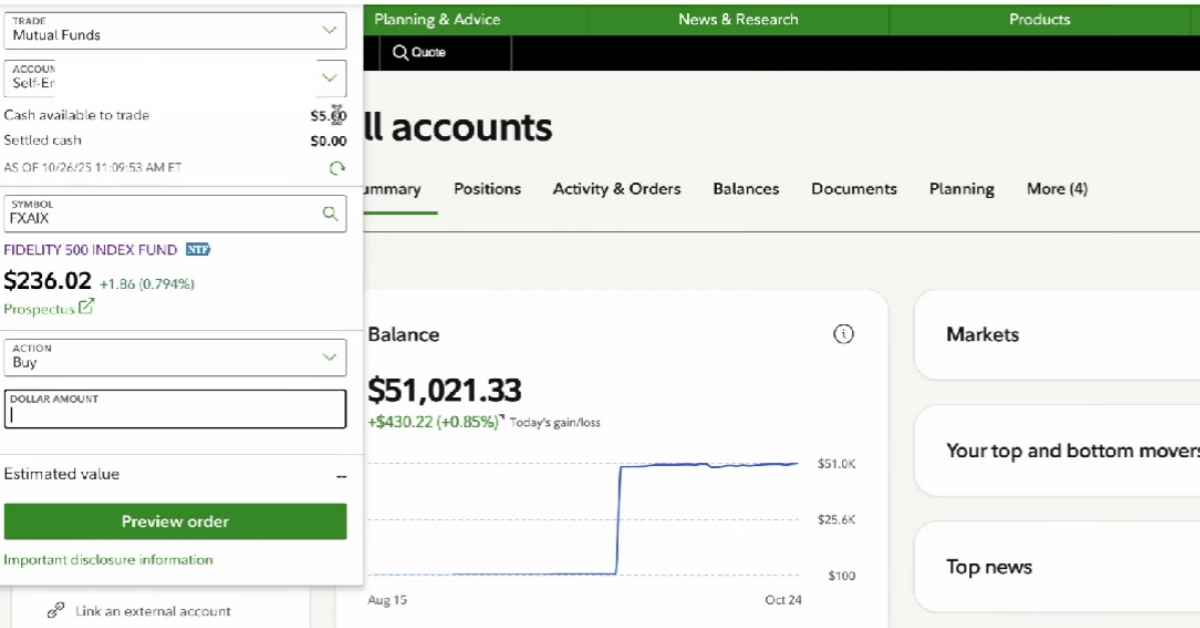
- From your dashboard, click the “Trade” button at the top of the screen.
- Ensure the trade type is set to “Mutual Funds” (it may auto-populate when you search for a fund).
- Select your Roth IRA as the account you’re trading in.
- In the symbol box, type “FXAIX” (or FSKAX/FZROX).
- For the “Action,” select “Buy.”
- For “Order Type,” choose “Dollar Amount” and enter the amount of cash you want to invest (e.g., your entire $7,000 contribution).
- Click “Preview Order,” review everything, and then click “Place Order.”
Congratulations! You have officially opened your Roth IRA, contributed to it, and invested in the stock market. The order will execute at the next available market price.
Pros and Cons of a Fidelity Roth IRA
It’s important to have a balanced view. Here’s what makes Fidelity great, and where beginners might face a slight learning curve.
| Pros | Cons |
|---|---|
| ✅ Top-Tier Index Funds: Access to best-in-class, low-fee funds like FXAIX. | ❌ Potential Overwhelm: The vast number of investment options can be paralyzing for newbies. |
| ✅ Zero Cost Options: Funds like FZROX have no expense ratio. | ❌ The “Sweep” Account: It’s easy to contribute cash and forget to actually invest it. |
| ✅ User-Friendly Platform: The website and app are intuitive and easy to navigate. | ❌ Customer Service Wait Times: Can be long during peak market hours. |
| ✅ No Account Minimums: You can start with any amount of money. | |
| ✅ Automation: You can set up automatic contributions and investments. |
Who is a Fidelity Roth IRA Best For?
This account is an excellent fit for:
- The Getting-Started Investor: If you’re new to the world of investing and want a simple, low-cost path to follow.
- The “Set-and-Forget” Saver: If you want to automate your contributions into a target-date fund or a simple index fund and not think about it.
- The Fee-Conscious Individual: If you want to keep more of your money by minimizing investment fees with funds like FZROX and FXAIX.
If you fall into any of these categories, opening a Fidelity Roth IRA is a strategic move for your financial future.
You’re Now an Investor
You’ve done it. You’ve broken through the initial barrier that stops most people. By following this Fidelity Roth IRA tutorial, you’ve learned how to:
- Open your Roth IRA account.
- Fund it with a contribution from your bank.
- Invest that money in a low-cost S&P 500 index fund (FXAIX).
The hardest part is over. Now, your job is to be consistent. Make contributing to and investing in your Roth IRA a regular habit every year. Your future self will thank you for the tax-free wealth you’re building today.
Ready to start? Head over to Fidelity’s website now to open your account.
FAQs
How long does the bank transfer take to go through?
While the EFT transfer can take 2-4 business days to fully settle, Fidelity typically makes the funds available for you to invest immediately after you initiate the transfer.
What’s the difference between FXAIX and FSKAX?
FXAIX tracks the S&P 500 (500 large companies), while FSKAX tracks the entire U.S. stock market (over 3,000 companies, including small and mid-caps). Both are excellent; FSKAX offers slightly more diversification.
What happens if I contribute more than the annual limit?
The IRS charges a 6% penalty on the excess contribution every year until it is removed. It’s crucial to track your contributions and stay within the limit.
When can I sell my investments in a Roth IRA?
You can sell at any time. However, to enjoy the tax-free growth benefits, you should generally avoid withdrawing any earnings until you are at least 59½ years old and have held the account for 5 years.
Can I open a Roth IRA if I already have a 401(k) at work?
Absolutely! In fact, it’s a great idea. Having a 401(k) does not affect your eligibility to also contribute to a Roth IRA, as long as you meet the income requirements.
Continue Your Investing Journey
Now that you’ve mastered setting up your Fidelity Roth IRA, the next step is to deepen your investment knowledge. If you’re curious about other investment vehicles that work well in retirement accounts, check out our comprehensive guide: How to Invest in ETFs for Beginners.